
Look for the yarn image, I said to my travelling partner. I don’t know what the yarn image looks like, she said. Look up. Oh.
It wasn’t always as simple. I had heard that you can buy yarn everywhere in Norway, even in grocery stores. It was almost as ubiquitous. I found yarn in the Bergen train station, in the Longyearbyen Co-op and a coffee shop. I did NOT find it in a grocery store, though one of my fellow cruisers did, in the village of Saebo.
I was in Norway to buy yarn. I was getting between yarn stores on Hurtigruten’s MS Trollfjord. This 500-passenger cruise ship travels from Bergen to Longyearbyen and Ny-Aleslund on Spitsbergen, an island of the Svalbard archipelago in the high arctic.
Our first scheduled port was Andlesnes, and I had every intention of taking a bus to the Hillesvag factory store (Hillesvag Ullvarefabrikk), less than an hour away. My plans were thwarted. Our ship had mechanical problems on its previous voyage and Hurtigruten spent a frantic day figuring out how to get the ship fixed, 450 passengers fed, housed for the night and ultimately transported to Aleslund. They did an admirable job, though there were hiccups.
It gave me a day to discover the yarn stores of Bergen. Most important for most travellers is the yarn store in the train station. Who hasn’t finished their travel project before anticipated, and needed. to pick up some emergency yarn?

The train station yarn store carries all the staples from Sandes Garn (I’m still cursing myself for not planning my travel well enough to have included a stop at the Sandes Garn factory store. It’s near Oslo and I flew into Bergen). They conveniently keep totes of yarn outside the store to ensure travellers are aware of their existence.
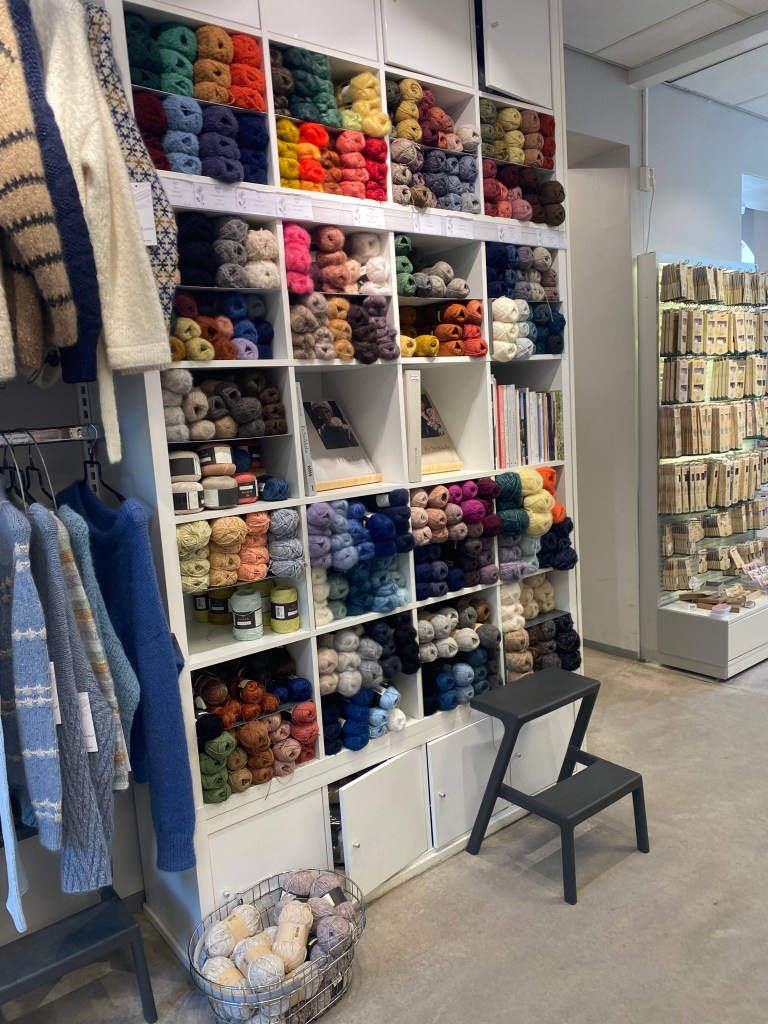
They’ve got samples as well as a foot stool to reach the higher shelves. The accessories wall has needles of every size for the power shopper/traveller.
Just a few blocks up from Bryggen, the UNESCO-listed preserved houses on the waterfront near the fish market, is a store labeled Bergen’s Borderi Service.
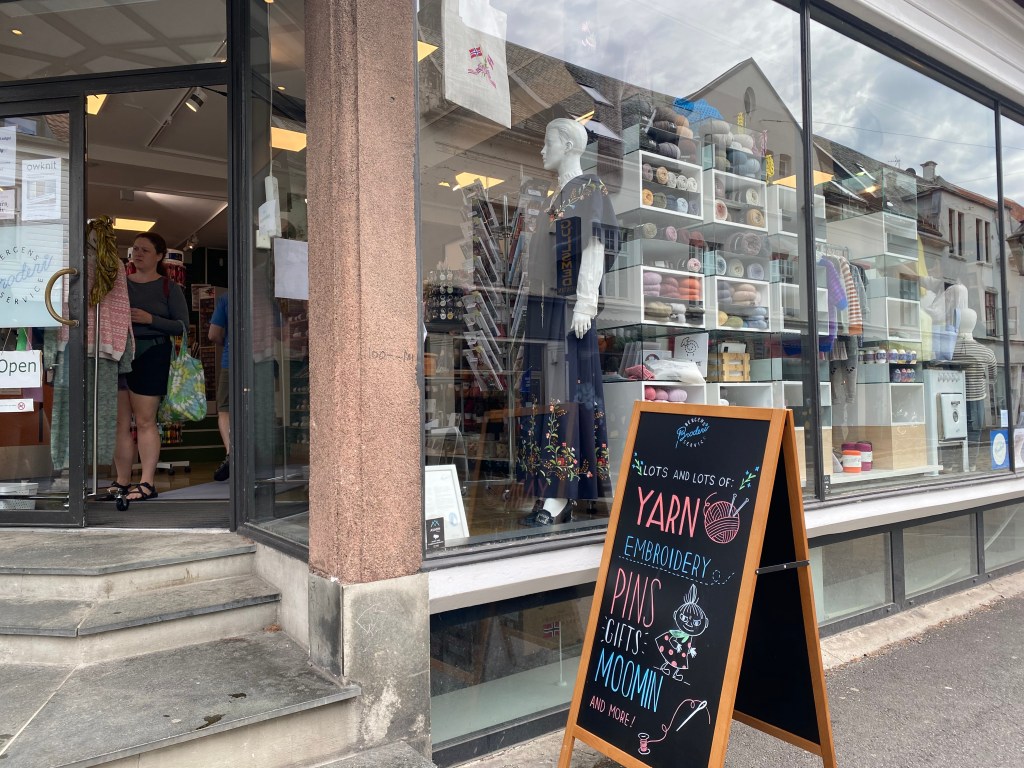
As well as a tremendous supply of Norwegian yarn, it has embroidery materials for people wishing to make national costumes.
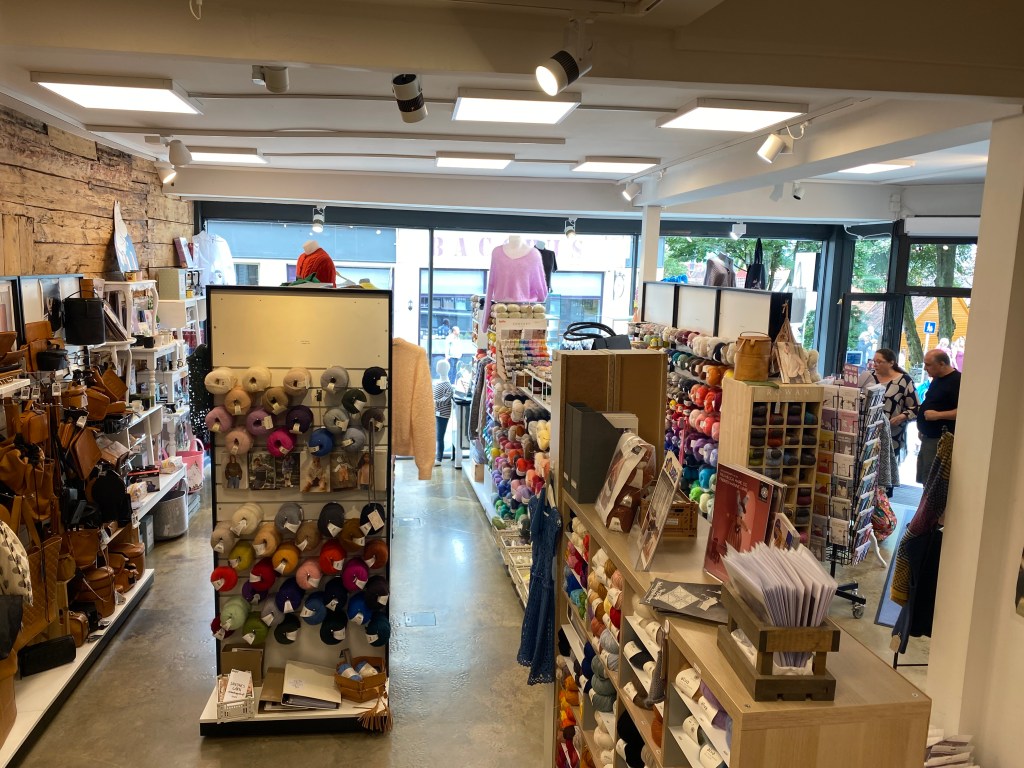
Most of the yarn is produced in Norway, though I also saw some Lang yarns.
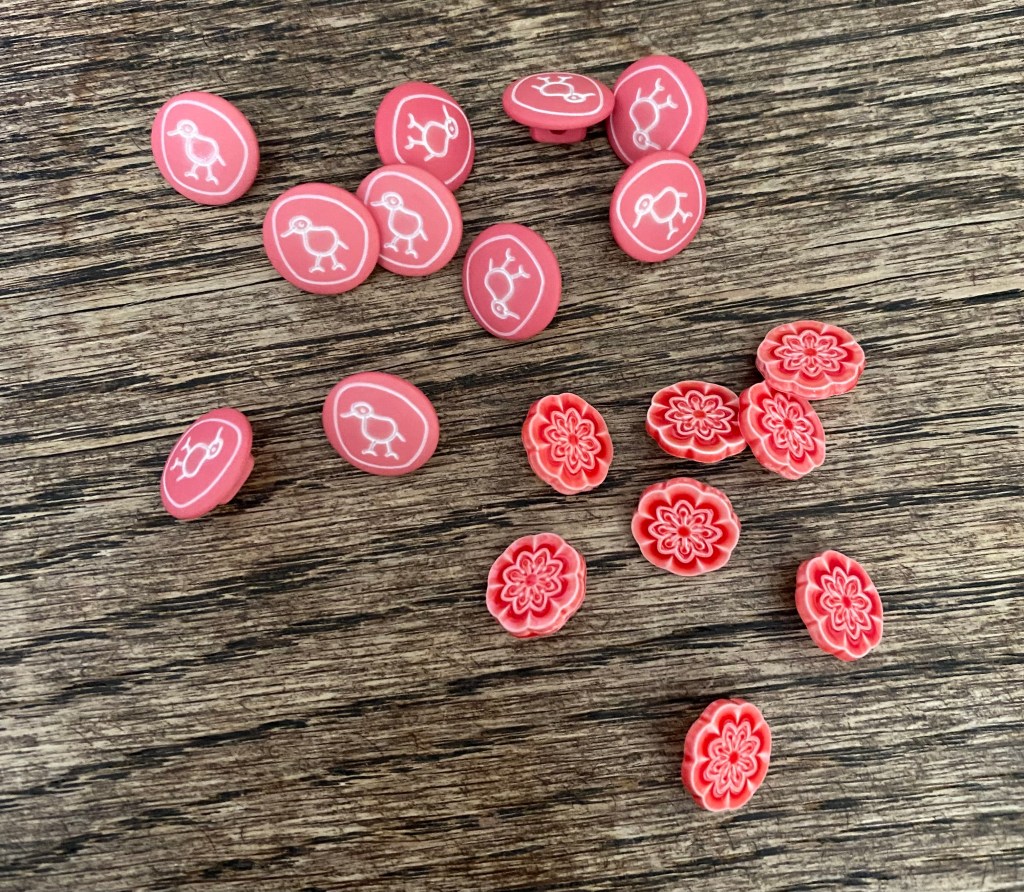
A friend sent me on a quest to find pink buttons for a floral themed sweater. This store had a tremendous selection of buttons!
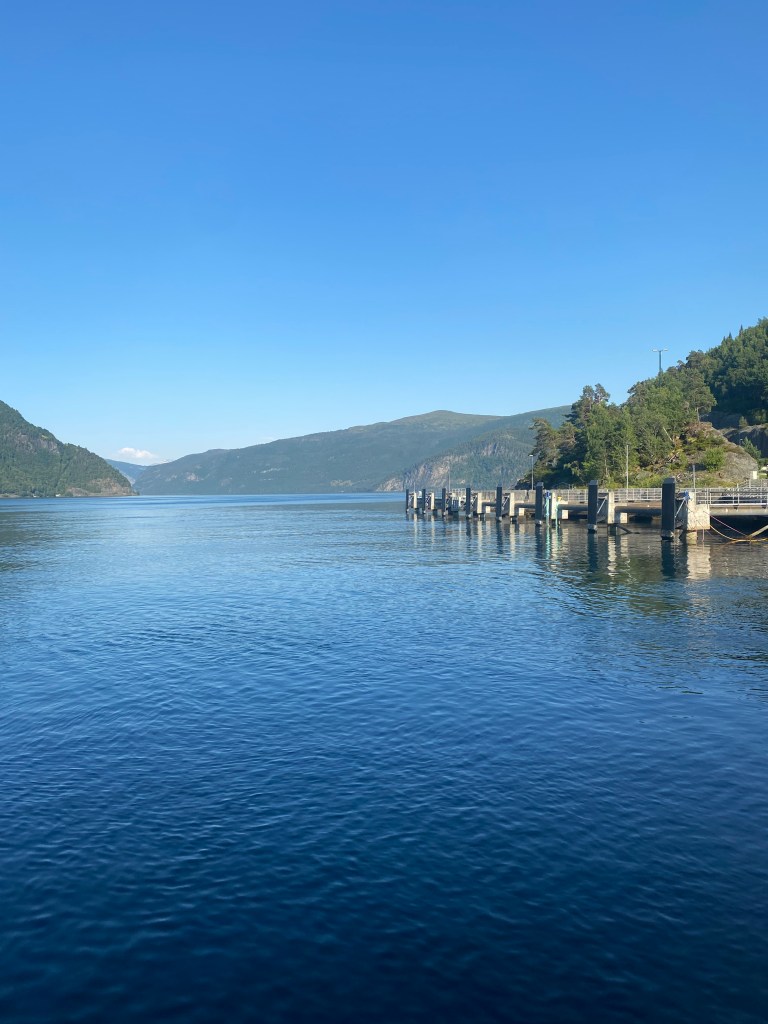
After 12 hours of driving by fjords, taking three ferries, being turned away from a fourth because there weren’t enough crew members, topping up the juice of the electric bus (it uses the same plug as a car), and a 3 pm meal, we made it to our ship.
The drive was scenic and pleasant. It was longer than anticipated partly because our driver was not familiar with the route. He did his best, and we saw the beauty of coastal Norway without incurring the cost of an excursion.
My next yarn stop was in the Lofoten Islands. Lofoten has its own specialty wool, like the Shetlands. Unlike the Shetlands, with Jamieson’s and Jamison & Smith yarn, Lofoten has a tiny distribution network. I got my wool at Cotgarden, the gift shop of a small inn and kayak rental in the idyllic village of Reine.
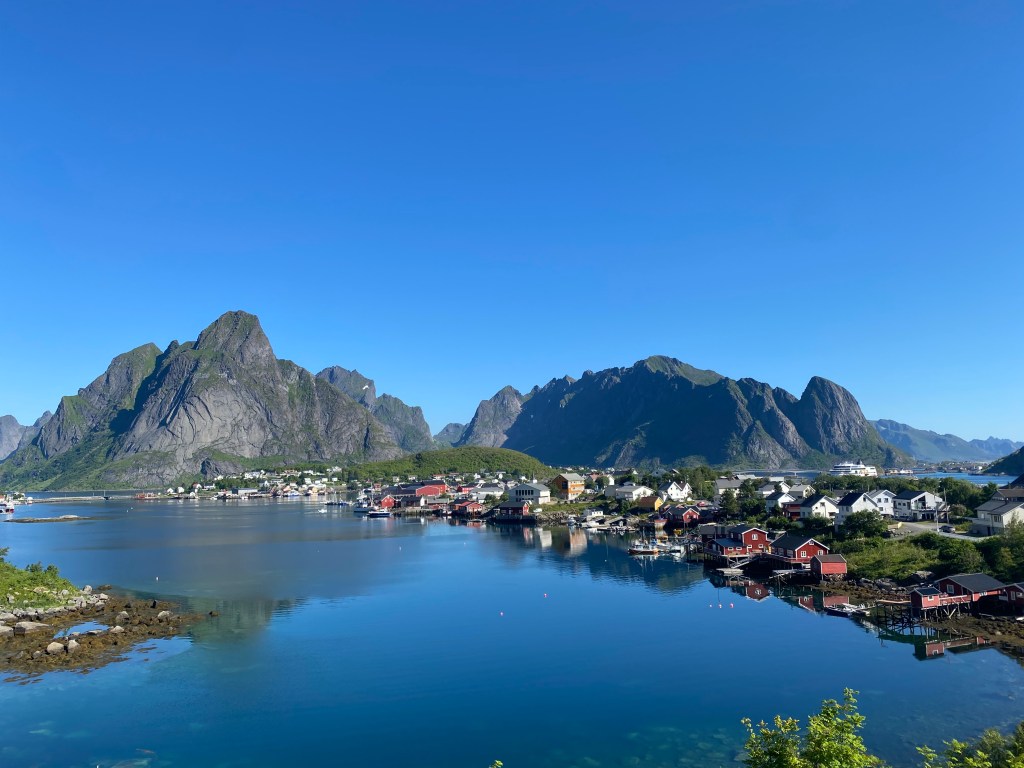
I left two balls for the next shopper.
In Tromso, our second stop, I didn’t have time for yarn shopping. Hard to imagine, I know.
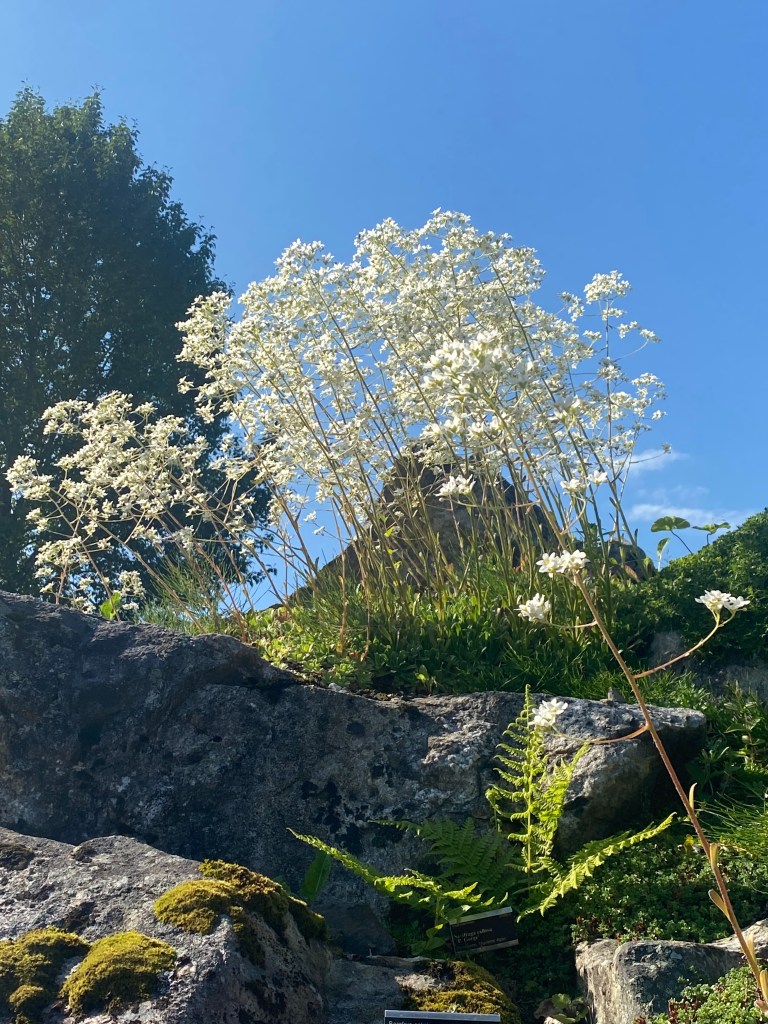
I wanted to see the Tromso Botanical Gardens, associated with the Tromso University.
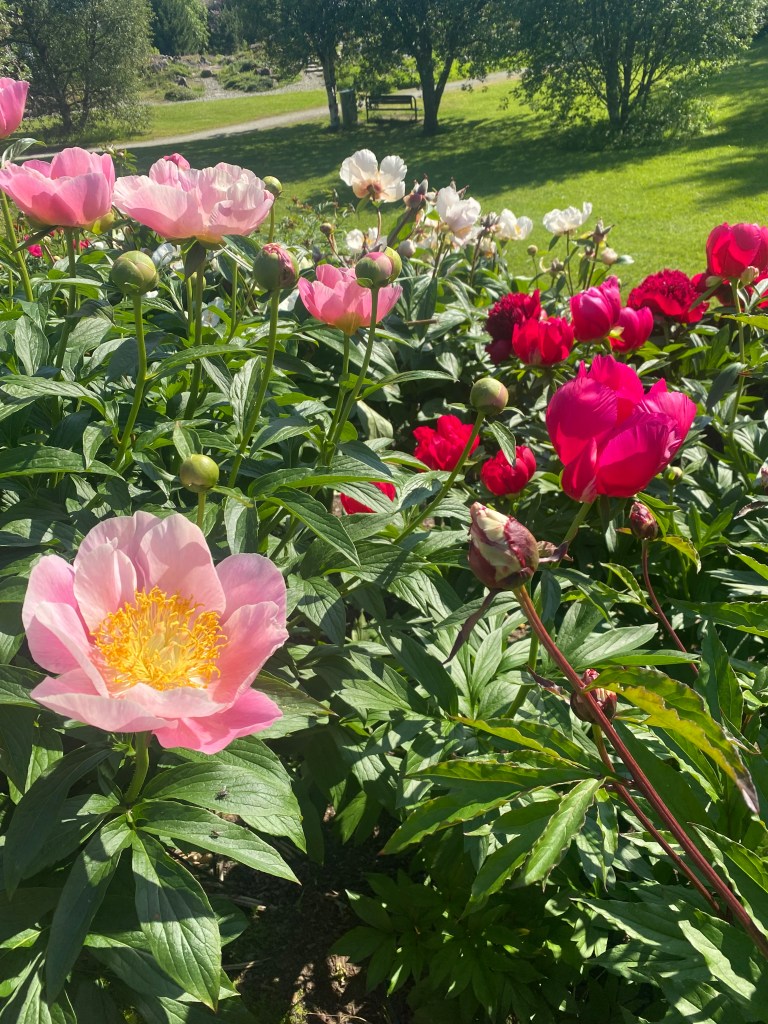
Its peony patch was modest and spectacular.

The blue poppies were at their prime.
We also made a quick visit to the gondola. Unfortunately there were four bus tours when we got there, and the lineups to get up and down were ridiculously long. It’s hard to complain about tourists when you are one.
My next yarn store was a surprise — in the Hot Chocolate store in Longyearbyen.
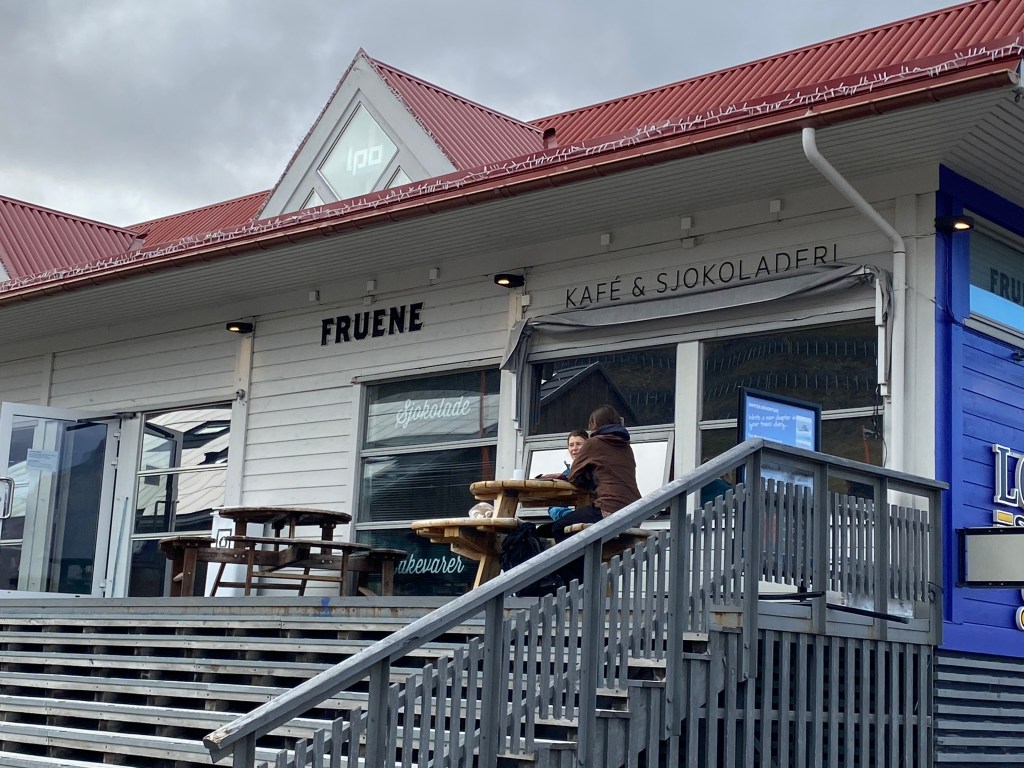
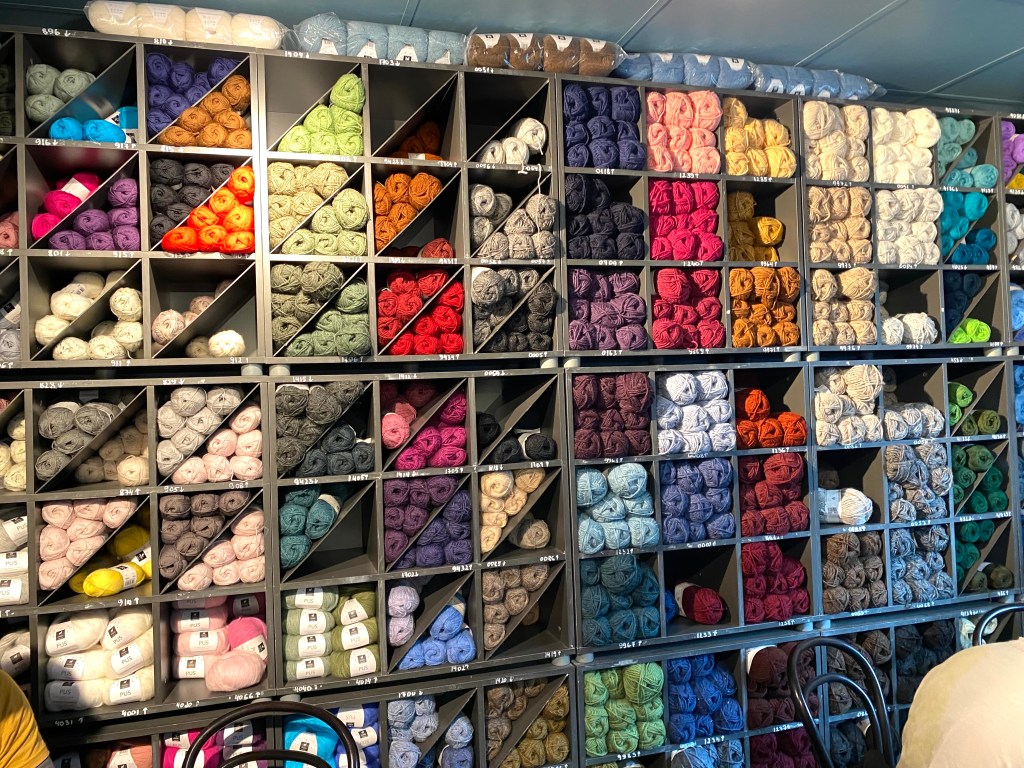
Here, I bought some Dales Of Norway yarn in yellow and blue. My projects for this trip were tote bags, to be felted when I got home. The first two were with Scandinavian geometric patterns. The yellow and blue were to feature songbirds.

Longyearbyen started as a coal mining town. The first mine was established by John Munro Longyear, and American. Today it’s both a mining town and a tourist town. Residents keep their skidoos on wooden pallets in the summer and scoot about in winter. Winters are long, since it’s 78 degrees north.
Just outside of Longyearbyen is the Global Seed Vault, with seeds from all over the world. It does not have a visitor centre, though many tourists stop by and take a photo of the front door. It’s outside of the ‘safe zone’, so visitors must either be in a vehicle or be armed. It seems as though the polar bears are aware of the safe zone boundaries, and stay away from the town.
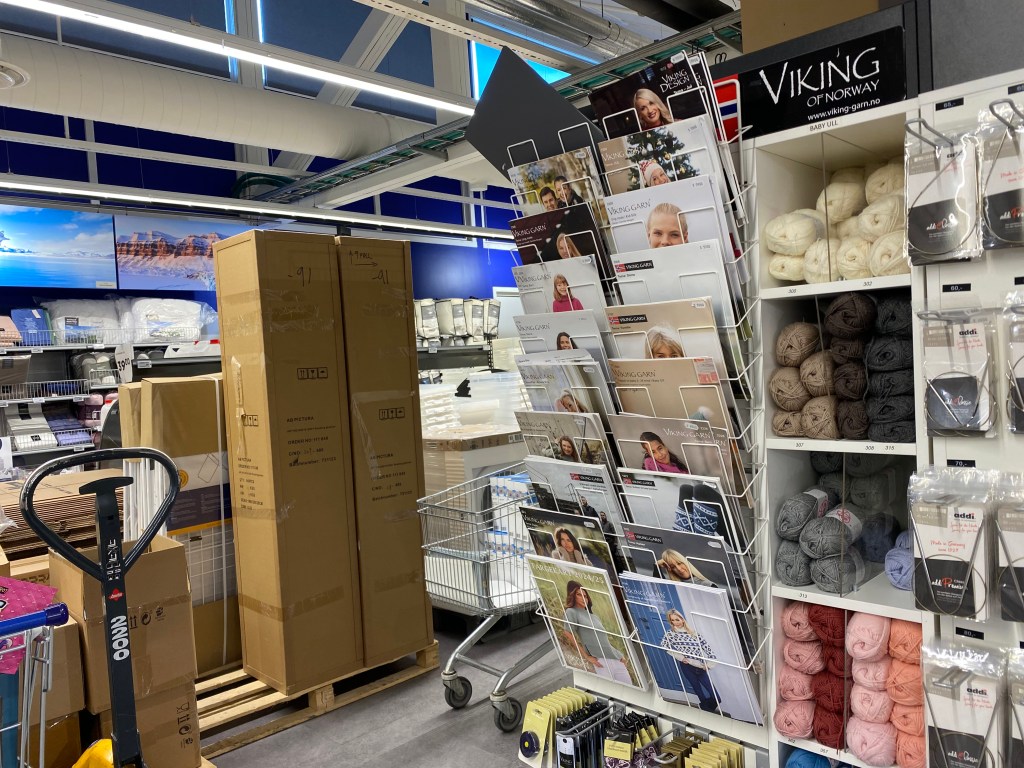
The Longyearbyen Co-op also had yarn, patterns and needles. It was right beside the flat pack furniture, in case someone had to build themselves more storage for their yarn and projects.
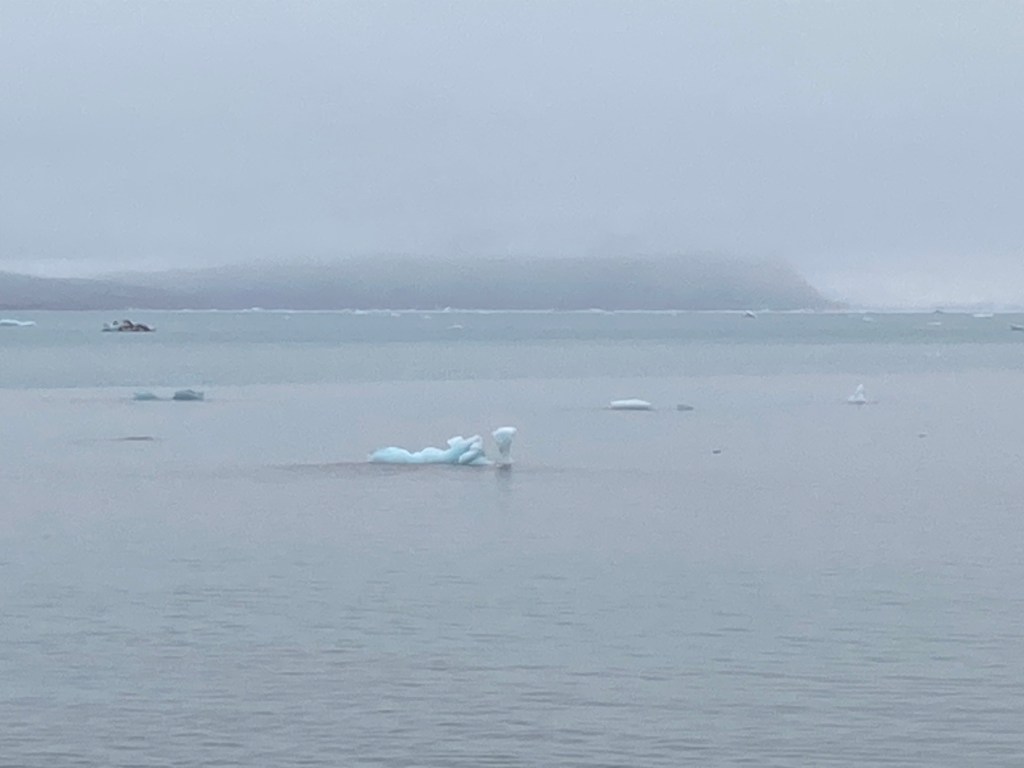
On our final morning in the far north, I woke up to fog in the air and ice in the water. Ny-Alesund is truly remote, at almost 79 degrees north.

The gift shop/post office had a wonderful selection of yarn, and was an unexpected treat. Even though our ship had 400 passengers at this point, we still flooded the small town. There was a staff member at the door, ensuring the store was never crowded and that people were able to enjoy their shopping experience.
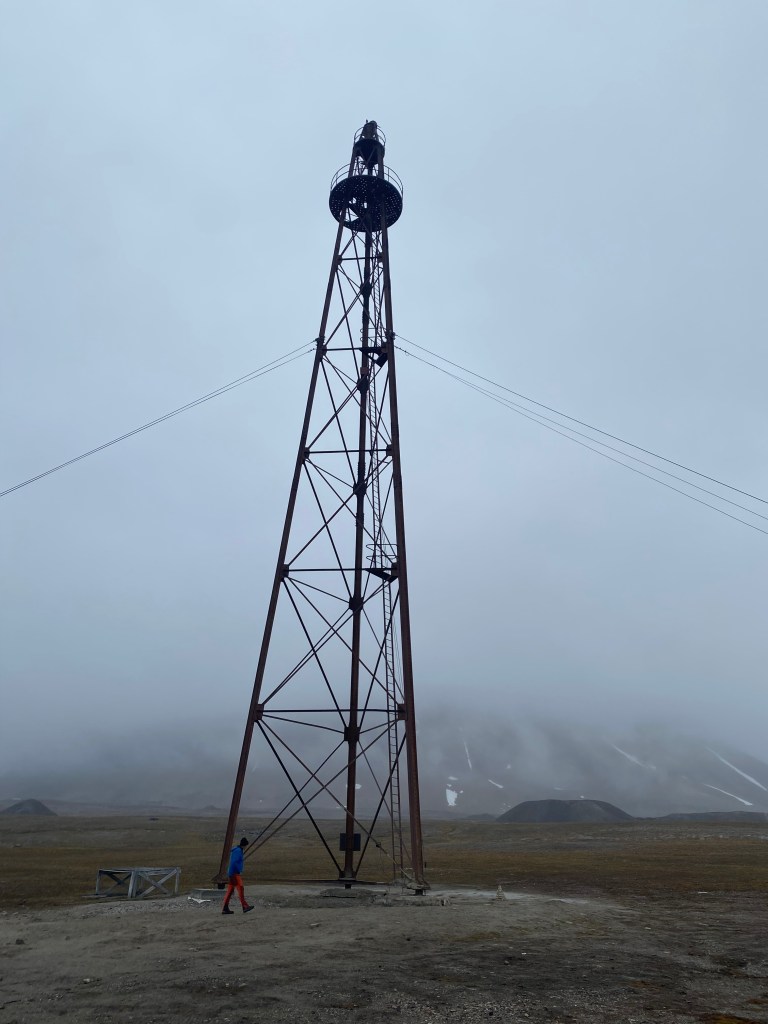
There are two attractions for visitors in Ny-Alesund: the docking tower that Roald Amundsen used when he tried to reach the North Pole by airship/zeppelin.
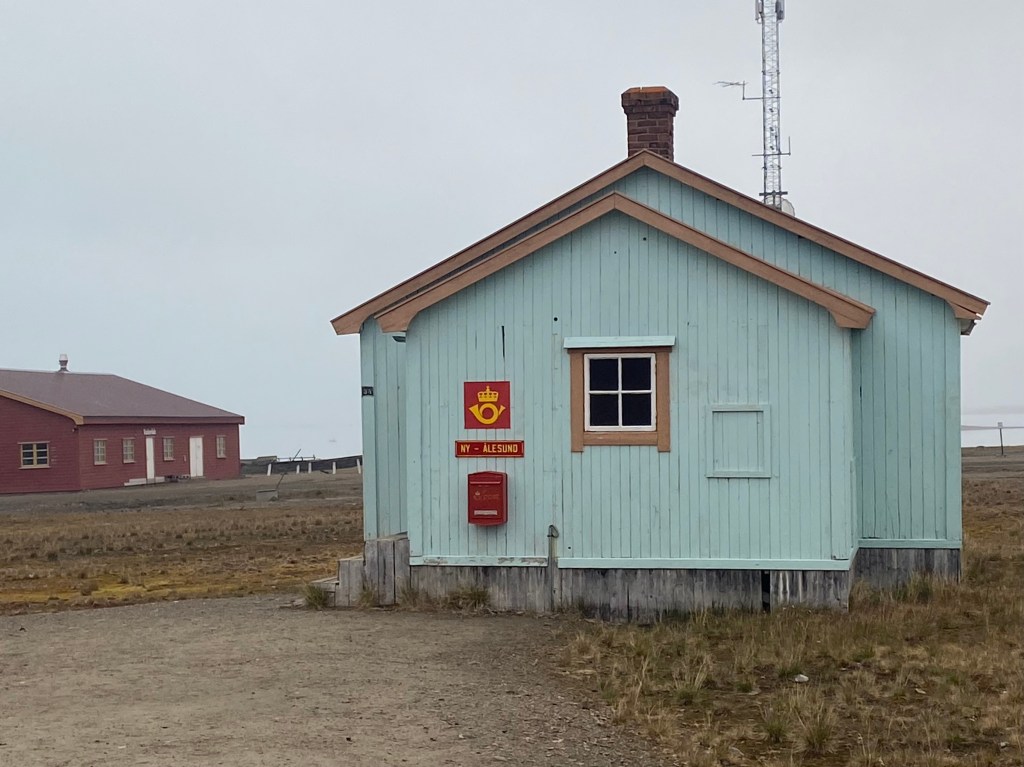
The other is the northernmost post office.
Residents of Ny-Alesund are mostly researchers from many different countries.
I managed to buy a bit more yarn on the southbound journey.
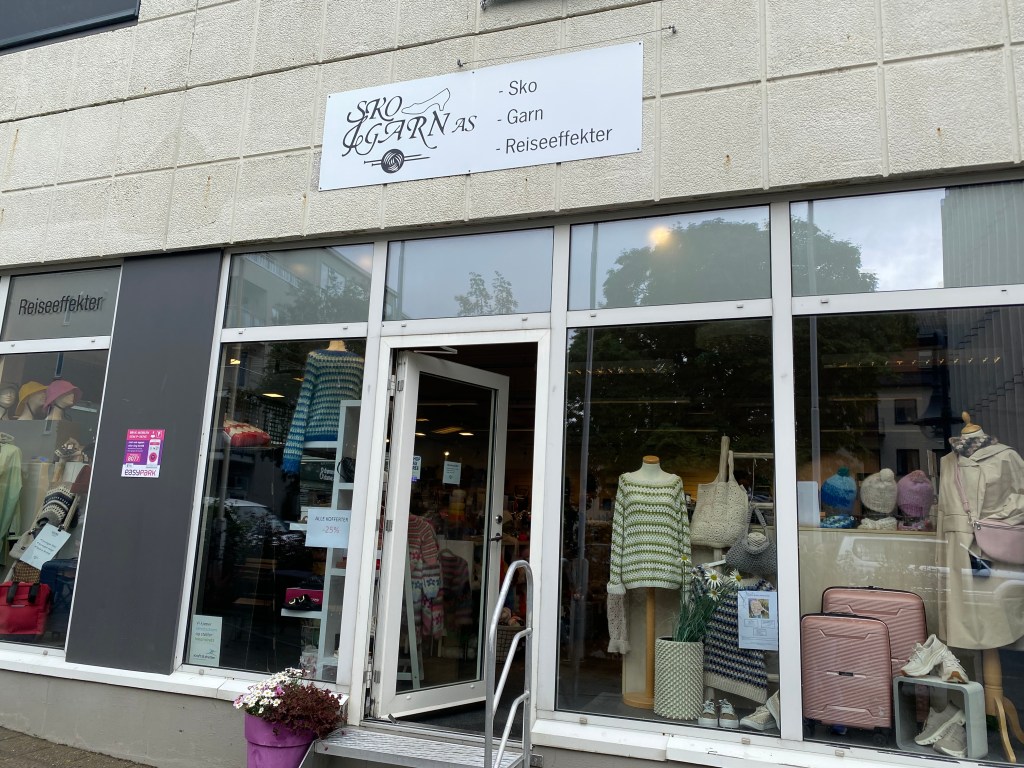

Sko Garn AS in Svolvaer has a wide selection of Norwegian yarn, and even sells suitcases in case you need an extra bag to take your purchases on the plane. As tempted as I was to get a new bag, I restricted my purchases to four skeins of Hillesvag yarn. My compression bags were all full and I also do not have room at home for any more yarn.
The ship had a couple more stops before Bergen, though I didn’t have any yarn stops. In Bergen, I visited two notable yarn shops.

Husfliden carries yarn as well as supplies for Norwegian National Costumes and made-in-Norway gifts. I visited the shop in Vagsalmenning and was totally captivated.
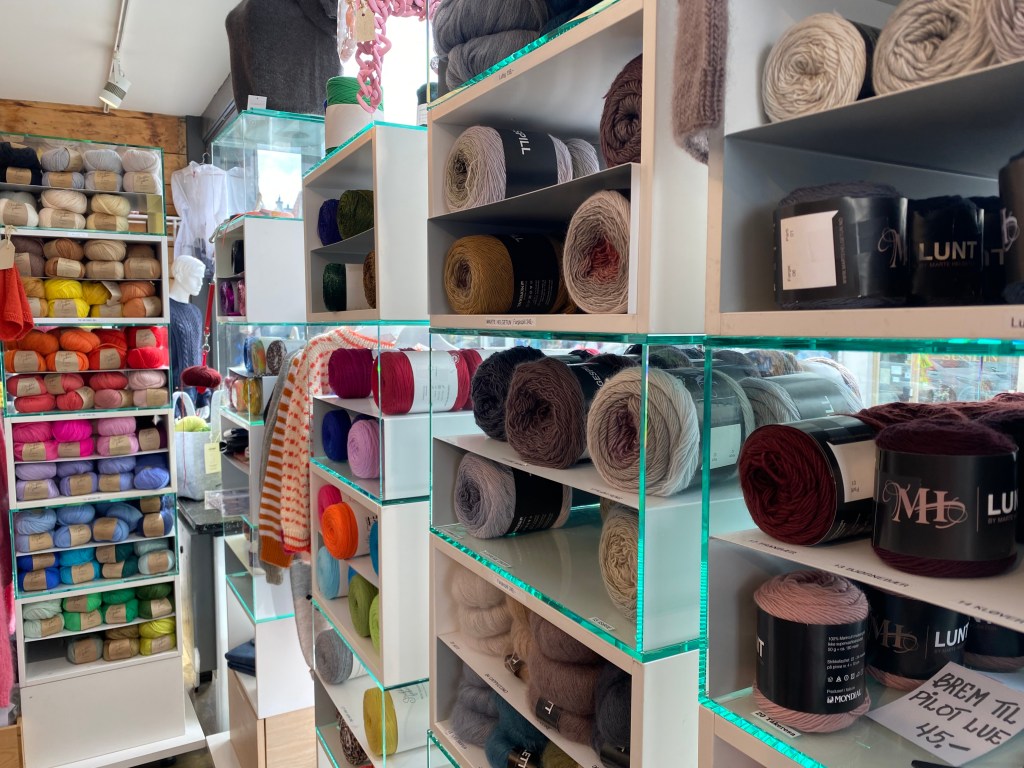
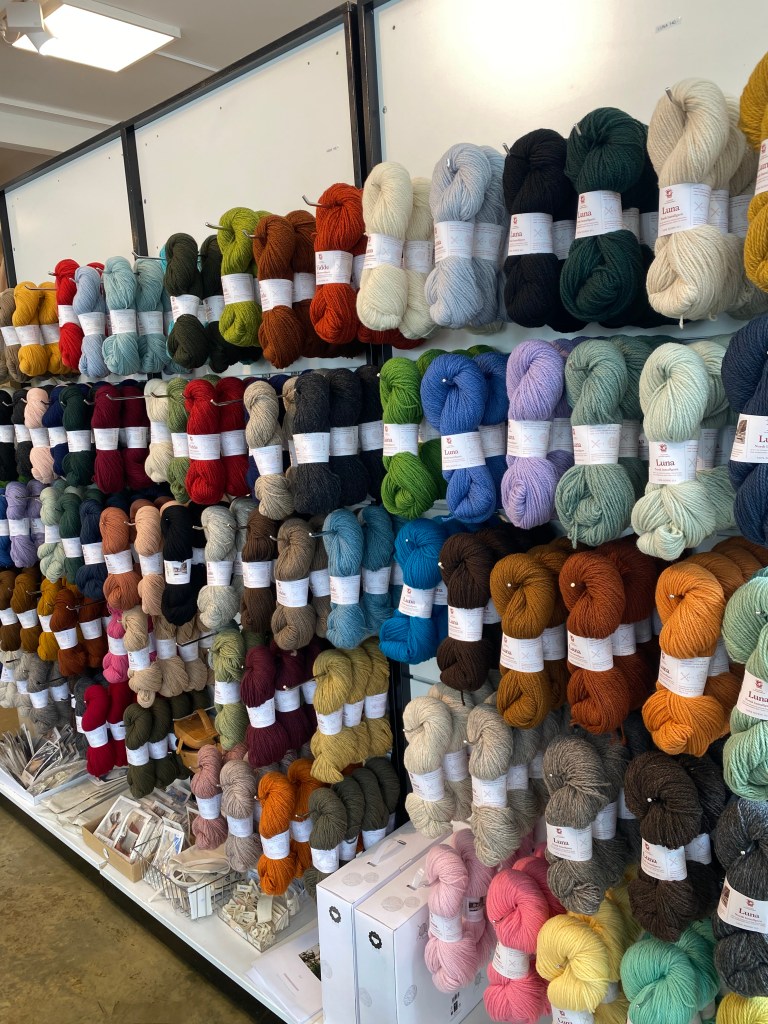
Here I got my first batch of Hillesvag yarn, since I knew I wasn’t going to get to the factory store.
The second yarn store I visited after disembarking was Modellstrikke.

This shop carries many yarns from Norway, along with some imported ones. Most notably, they carry Knitting for Olive, a Danish favourite of mine. The supply of buttons is modest compared to Bergen’s Broderi Service, though it is better than many places in Canada.
Compression bags and a half-filled suitcase on my outbound journey were not enough. I could have brought home significantly more souvenir yarn. Nonetheless, I enjoyed seeing these beautiful yarn stores and buying what I could.
 Juliette Knits