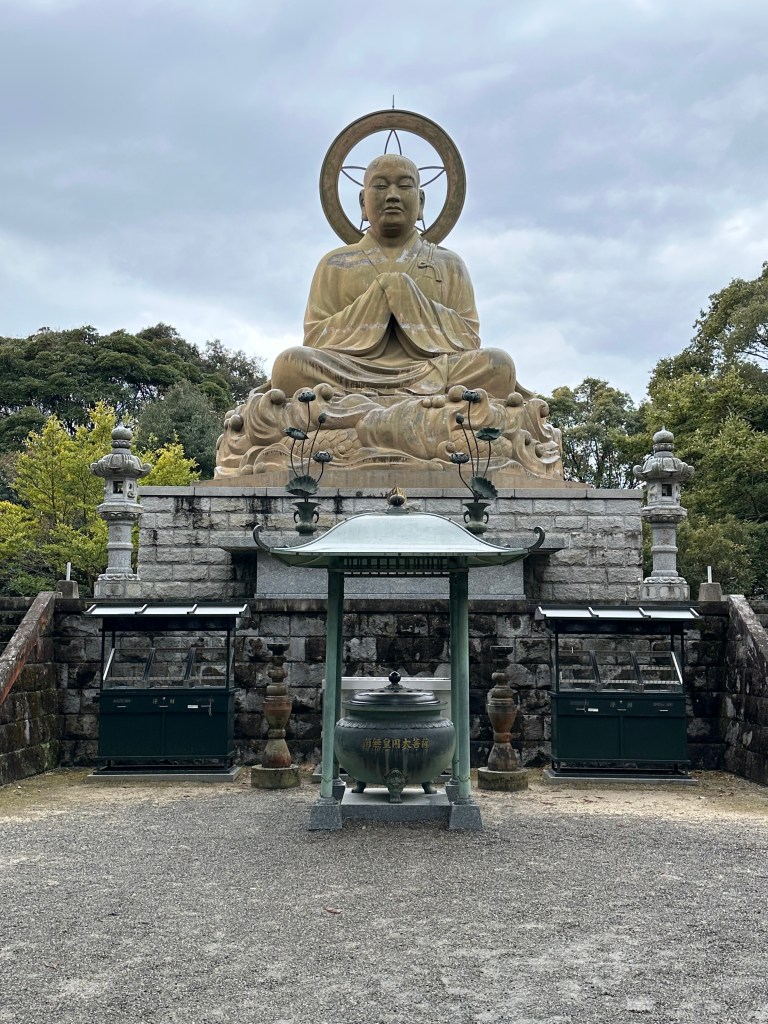
Before making it to the Takachiho Gorge, we stopped at a temple with a large Buddha and an almost-as-large bell.
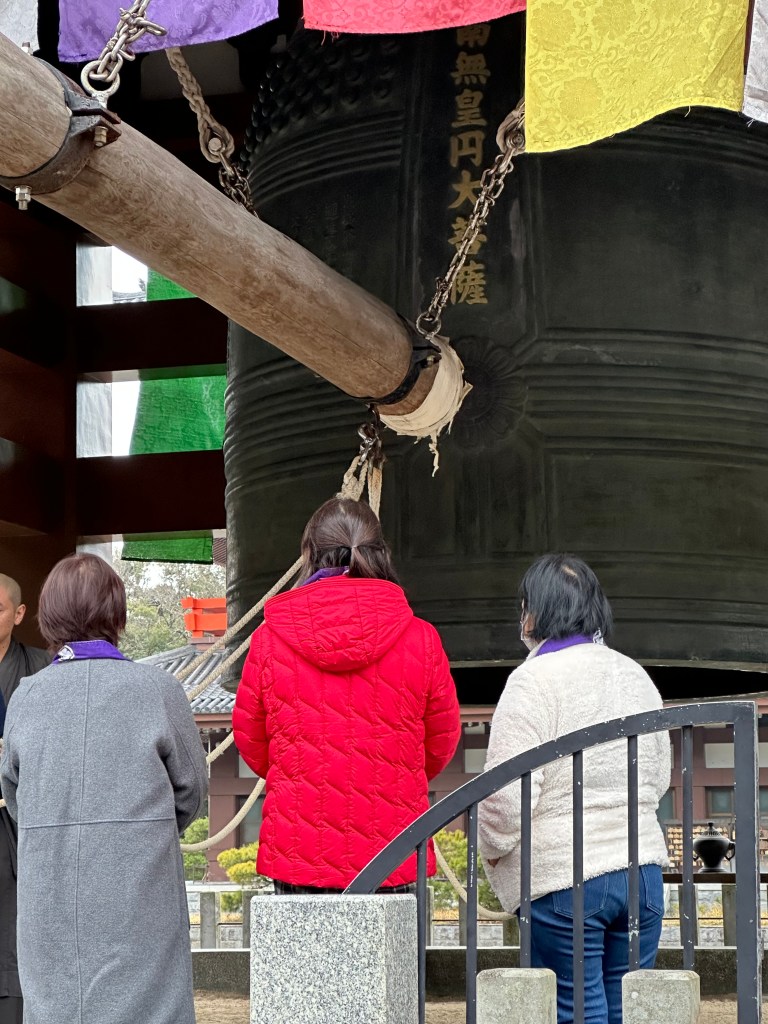
Six visitors were invited by a resident monk of the Rengein Tanjojo Okunoin Temple to help strike the biggest bell in Japan. Its deep sound resonates throughout the grounds, and throughout the visitors. You can feel the bass.
We got there at noon, and thought we had plenty of time to walk up from the parking lot. It rang five times, not twelve, and we saw the end of gong 4 and all of the last gong. It takes strength and determination to pull those ropes on the log that rings the gong.
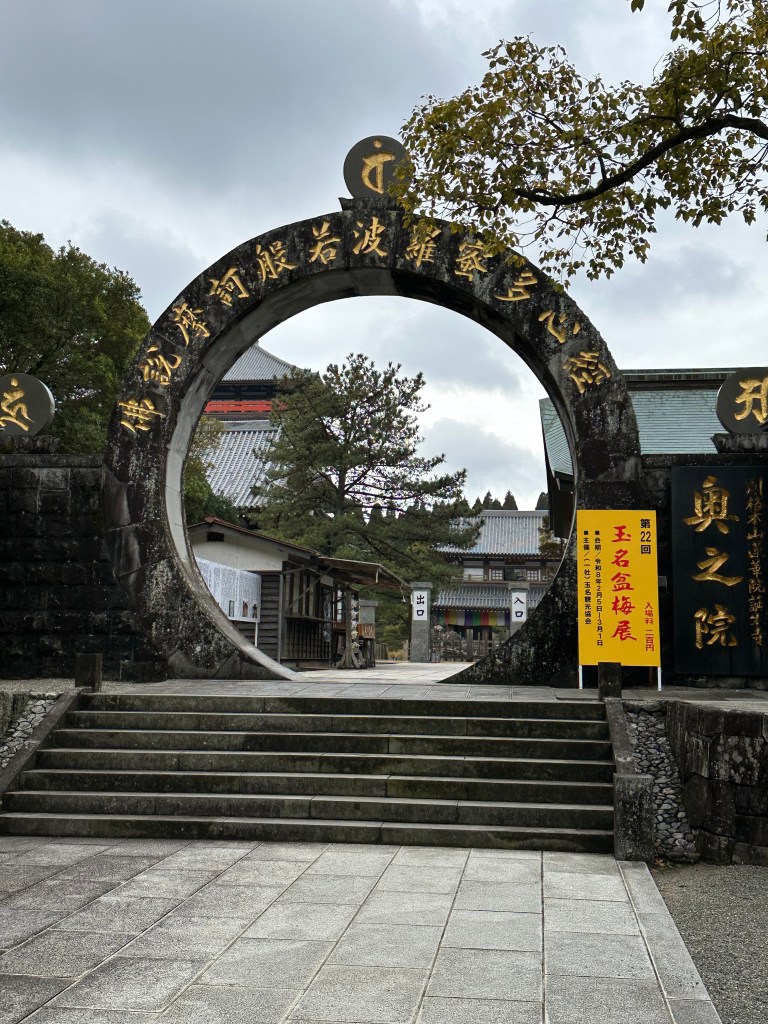
The entrance to the temple is impressive and welcoming.
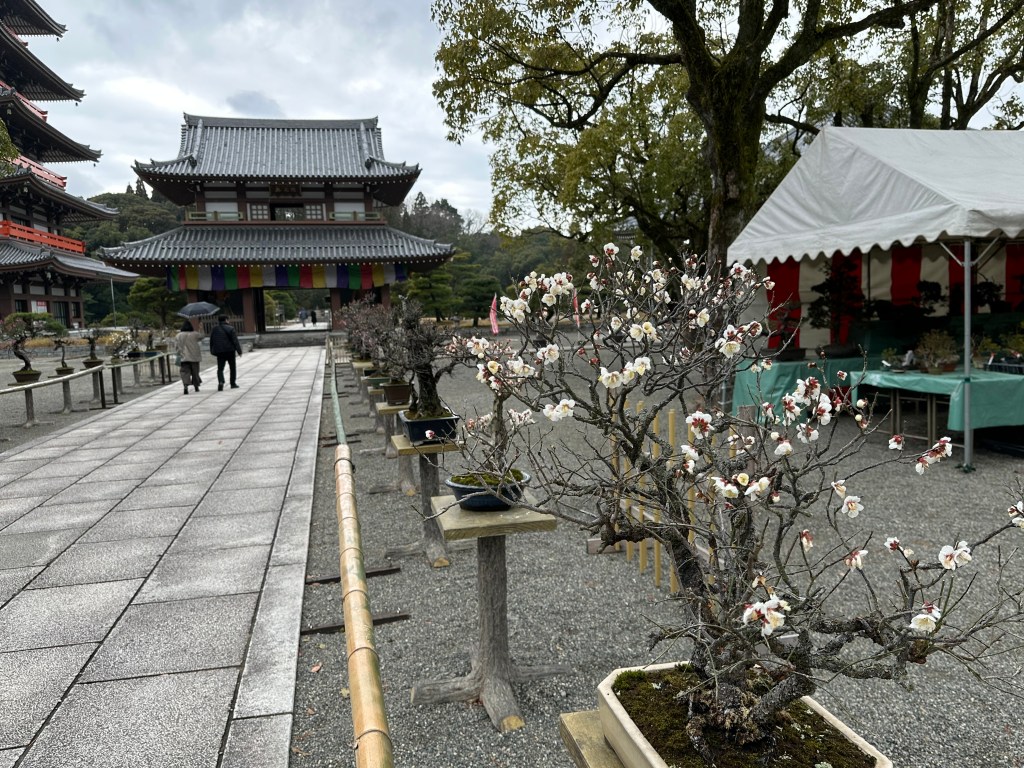
When we were there, bonsai fruit trees lined the avenue. There was a tent to the side with various bonsai plants for sale.
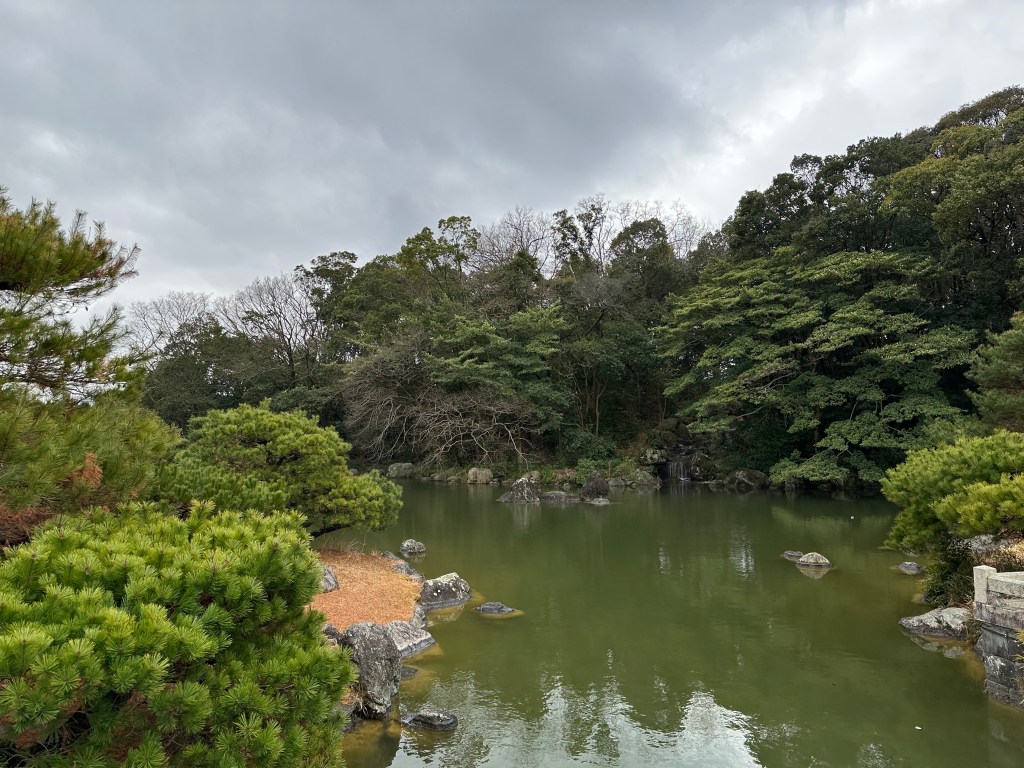
The grounds included a serene garden.
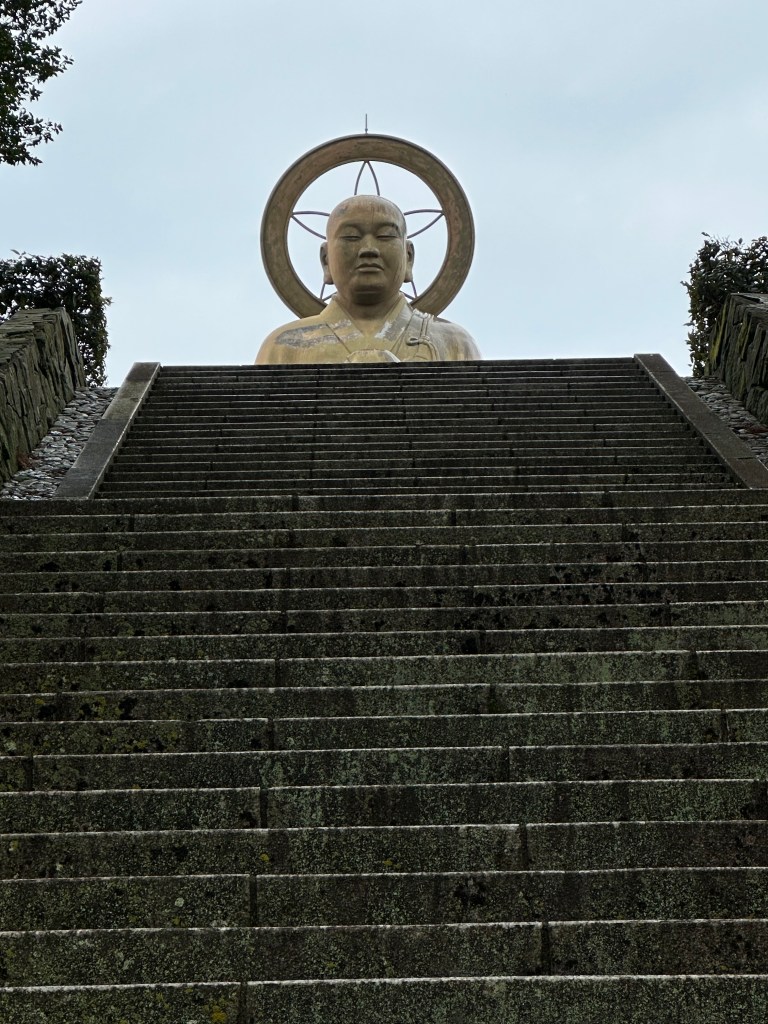
The Buddha himself sat atop a staircase.
It was time to get back in the car, to make our 3 pm reservation for a row boat at the Takachiho Gorge.
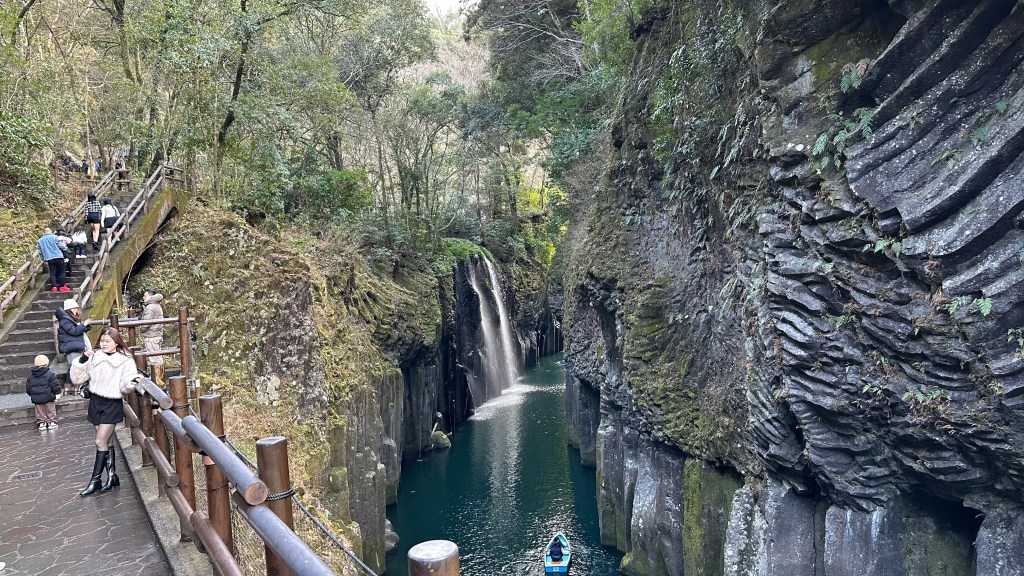
The site is well organised, and some traffic attendants sent us to a parking lot about a kilometre from the boat rental. We sped along, not wanting to miss our rental window.
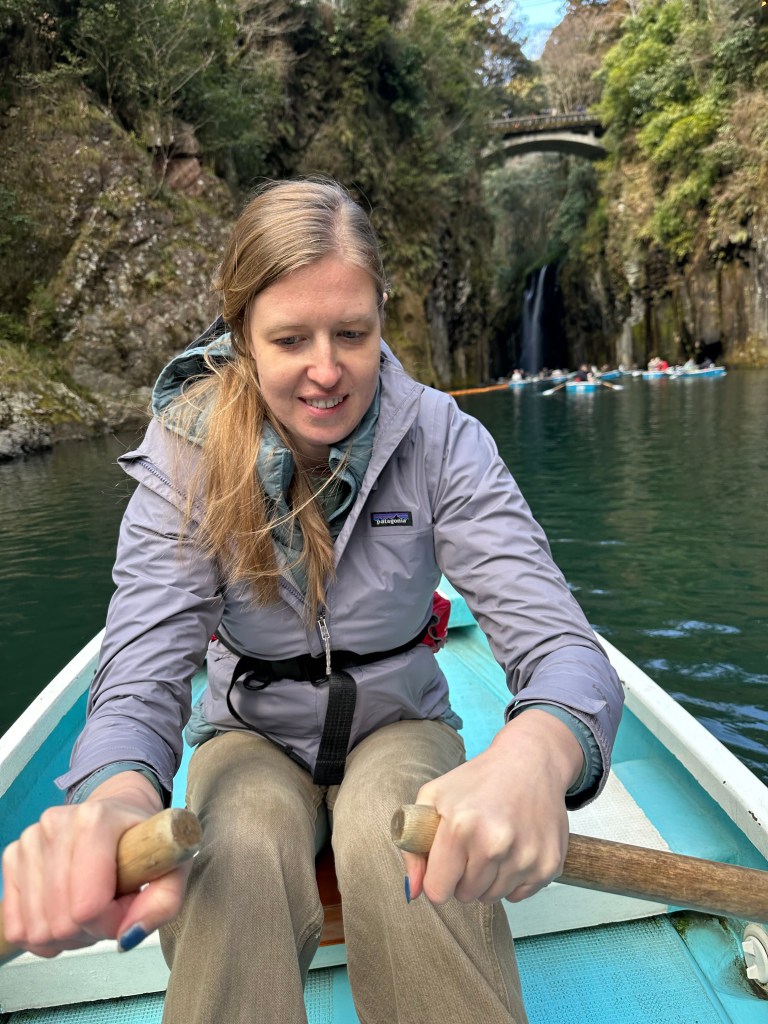
They fitted us with floatation cushions and lap belts that doubled as Personal Floatation Devices, and sent us on our way. Anita rowed while I recommended which paddle to use. Many others on the water that day were less skilled at rowing, and there were plenty of laughs to go along with the plenty of collisions. As you can see in this photo, there were floats marking the boundaries of the rowing area.
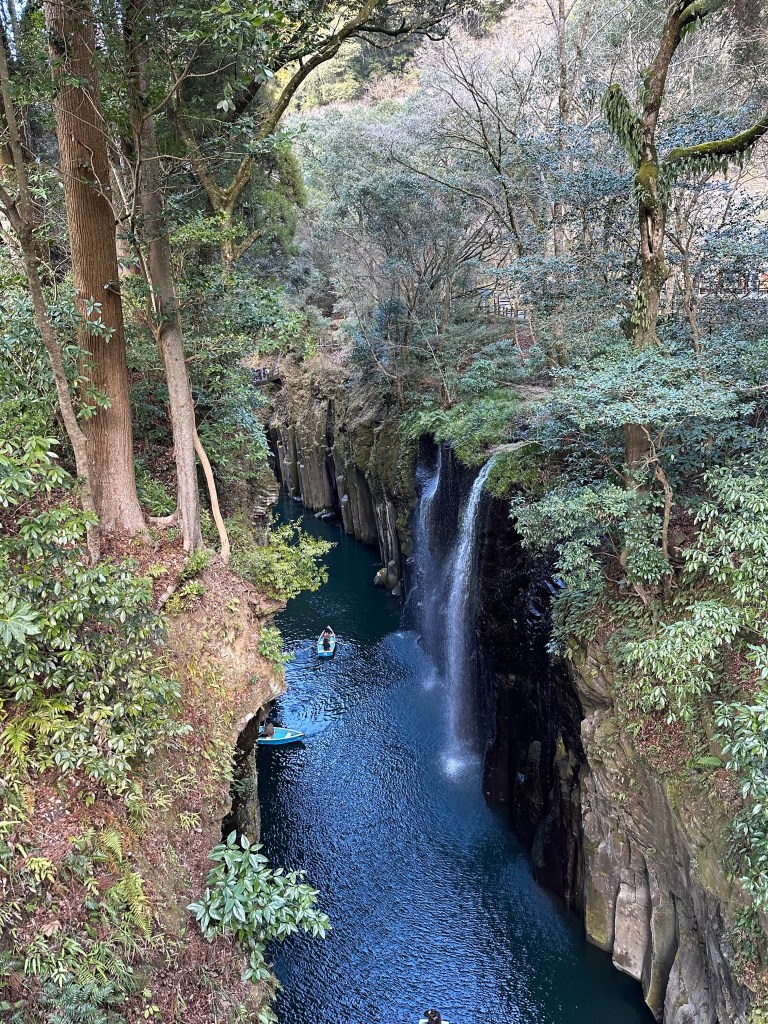
The area is spectacular. I can only imagine what it’s like when the Rhododendrons and fruit trees are in bloom.
We rented a car to drive around Kyushu. There are bus trips from Fukuoka to both Huis Ten Bosch and the Takachiho Gorge, but not to both. We could have take two day trips. It was more cost effective to rent a car for two people.
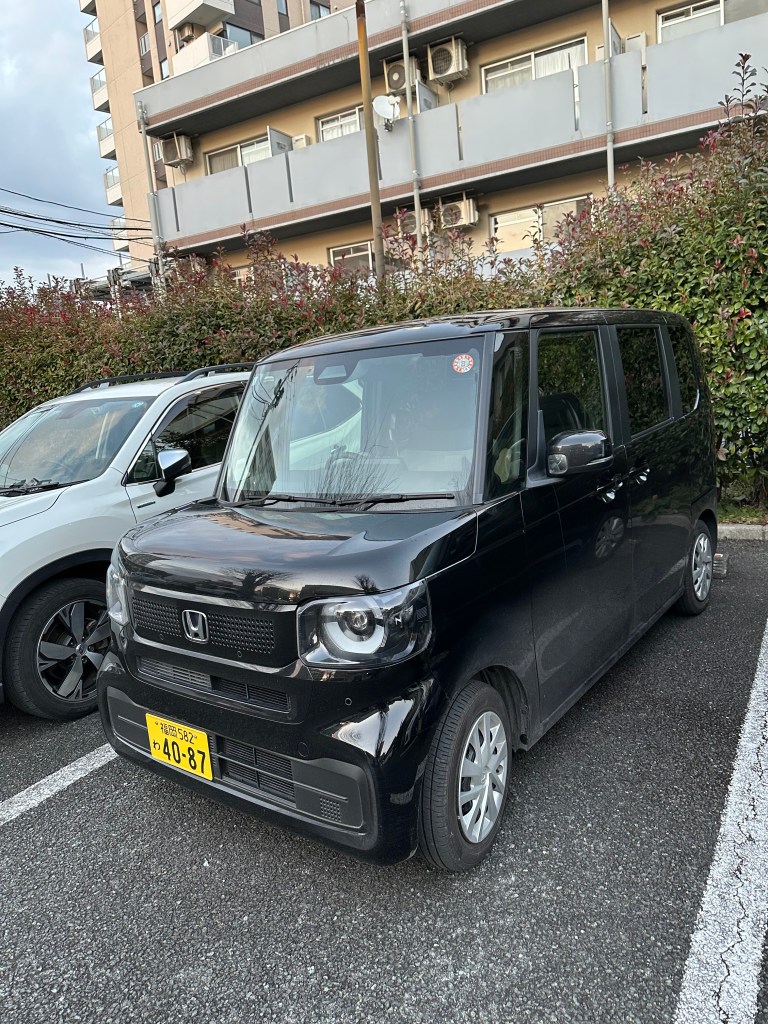
We got a K Car, common on the roads in Japan. It’s narrow and fuel efficient. I was quite excited to have such a rental. The GPS was particularly good, showing distances in 100 meter increments as we approached a turn. It didn’t have Apple CarPlay, so we didn’t have music (which would probably have distracted from our attention to our surroundings).
This was a wonderful trip. As before, we found the transportation system incredibly efficient. Trains arrived and left when expected. Everything was clean. People were kind. Bus drivers thanked people for taking transit and having their passes or fares ready at disembarkation. Store clerks were content to pick coins out for my purchases, provided I used the ever-present tray rather than my proffered palm. I rarely had my glasses on to riffle through the coins to figure out the right configuration for payment.
Before my next trip, regardless of where it is, I am going to train on stairs. Before this trip, I did a lot of walking. That exercise didn’t help enough with a 50-step climb out of a subway station or up a temple. I used an eSIM card for the first time, and was pleased at how easy it was to use.
A lot of people I know are travelling to Japan now. Both my dentist and my specialist-dentist are skiing in Japan in 2026. Two knitters I follow on Instagram went to Japan to explore the country and its knitting shops. Regardless of this North American influx, the cities are crowded with locals and the planes and trains have a mix of locals and visitors. It’s fun seeing their pictures, and showing my own.
 Juliette Knits