We’ve covered a lot of ground in the past few days. After Osaka ( Universal Studios Japan), we went south to Hiroshima to visit the Mazda factory then to Suo Ochima to see friends.
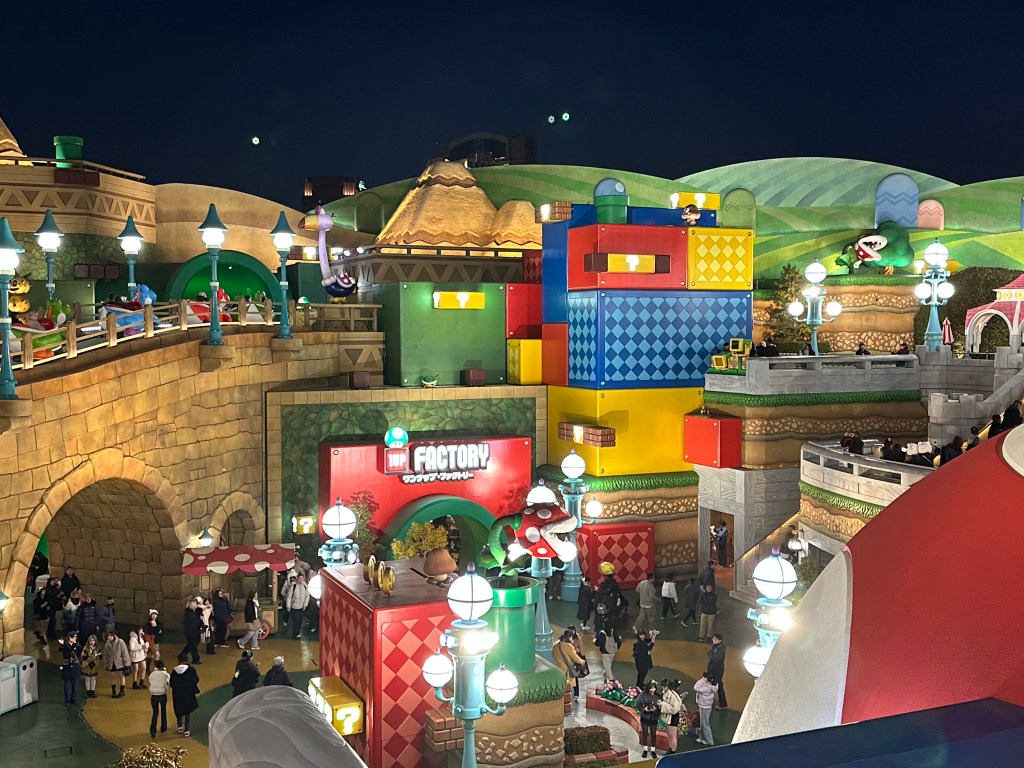
After the main arcade of Osaka, I wasn’t sure if Universal Studios Japan would be overwhelming any more. It was. Our main impetus was the new Mario Cart World. It is a superabundance of colour, sound and visitors.
We went on the Jaws ride as single riders, and at the last minute, I switched phone to the same pocket as my Suica card (train and transit pass). Naturally when I pulled my phone out to text Anita to figure out where she was, I dropped my Suica card. I noticed during lunch, and we started the process of finding out whether it had been turned into Lost and Found. Helpful hint: when you buy a Suica card or any sort of transit pass when you’re travelling, take a photo of its registration numbers.
Fortunately my card was found right where I thought I lost it. We picked it up again about 5 meters from where I dropped it. Park officials made me sign a receipt, and we were on our way. Phew.
Our next big stop was the Mazda factory on the north side of Hiroshima. It’s an enormous property with its own bridge and shipping terminal. The gateway is the business office, a 10 minute bus ride from the Mazda Museum and portion of the assembly line that visitors are allowed to see.
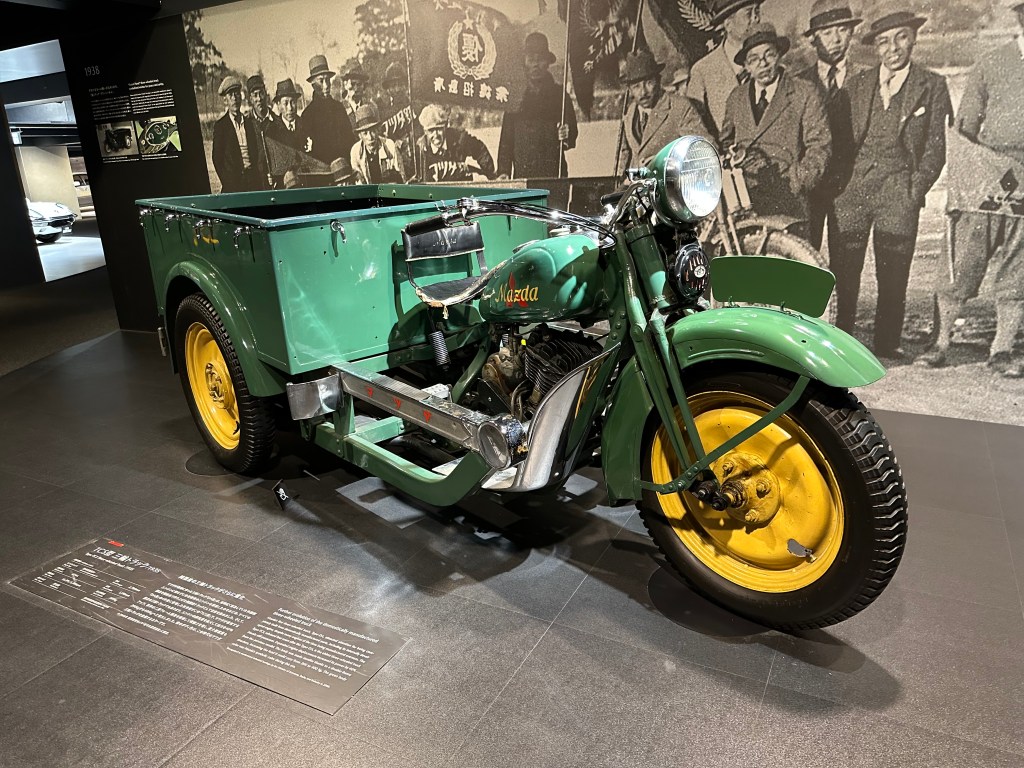
The first Mazdas were known as green panel trucks, with three wheels, motorcycle style handlebars for a steering wheel and a large box for cargo. They were initially produced before the Second World War, and four months after the Americans dropped their infamous bomb, 12 came off the assembly line.
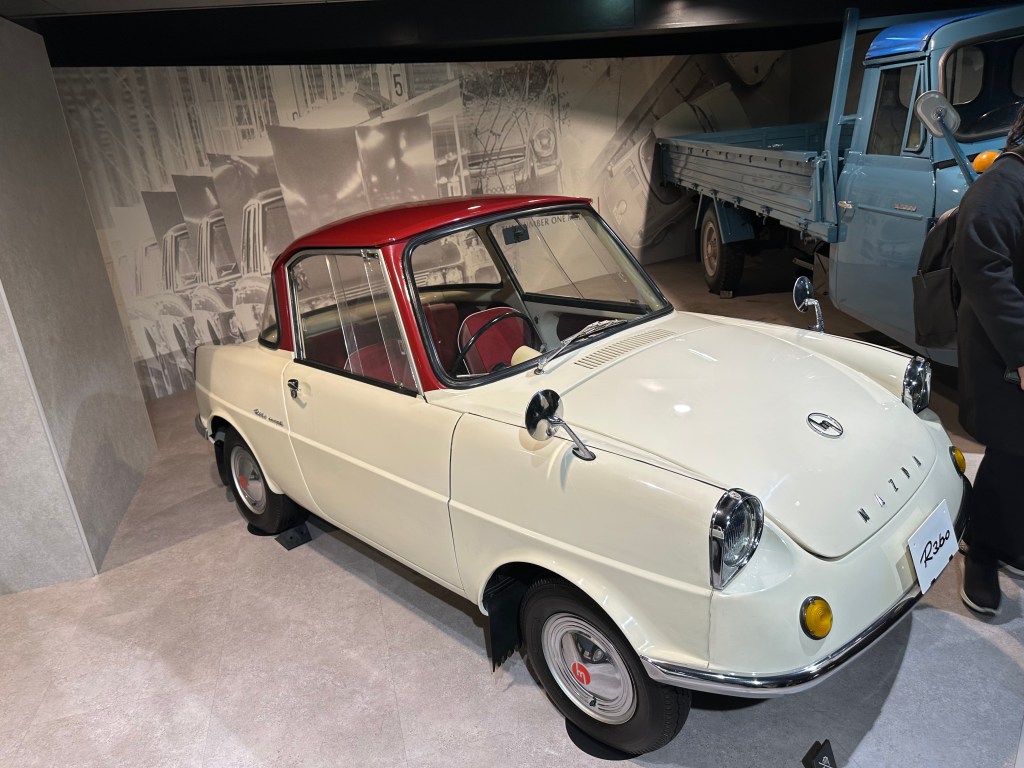
Next came a cute little two seater.
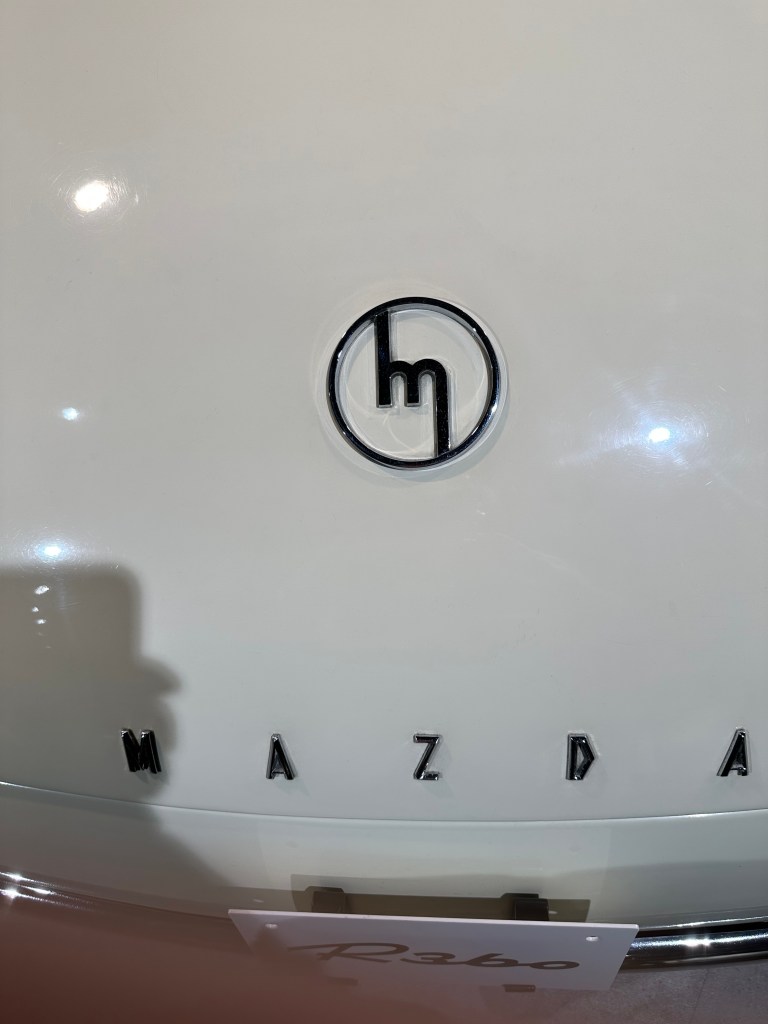
Logos changed over time, the zoom-zoom advertising campaign came and went, and cars continued to be made. Now bodies of new models are made and perfected in clay before dies are made to stamp out metal car parts. The red of my CX-30 is also a relatively new development.
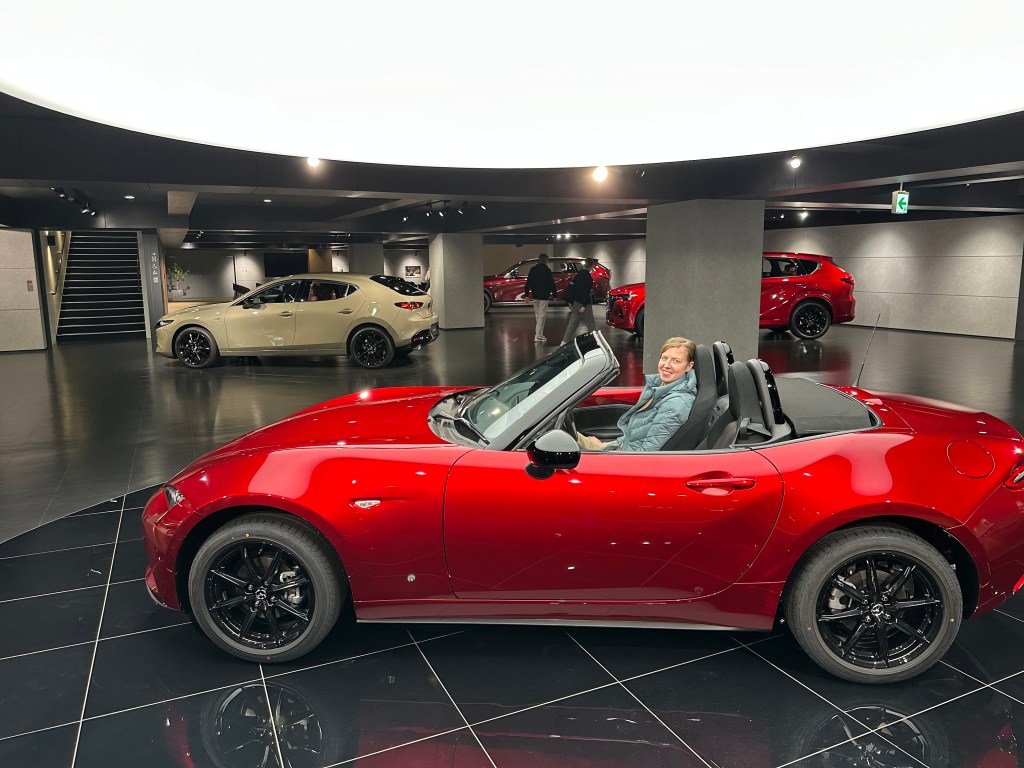
it was interesting to watch the production line. We saw dashboard panels installed, followed by motors and axles. The latter are raised up to the chassis line. The workers bolting them in were on hydraulic lifts and they bolted from above and below. The most surprising element for me was the vehicles were grouped by colour, not model. There were right and left hand drive red CX5s, 3s, MX7s (or whatever Miatas are called these days) and others followed by an equally eclectic array of blue cars. I asked if they did this just for the tour, and was told it was the usual practice.
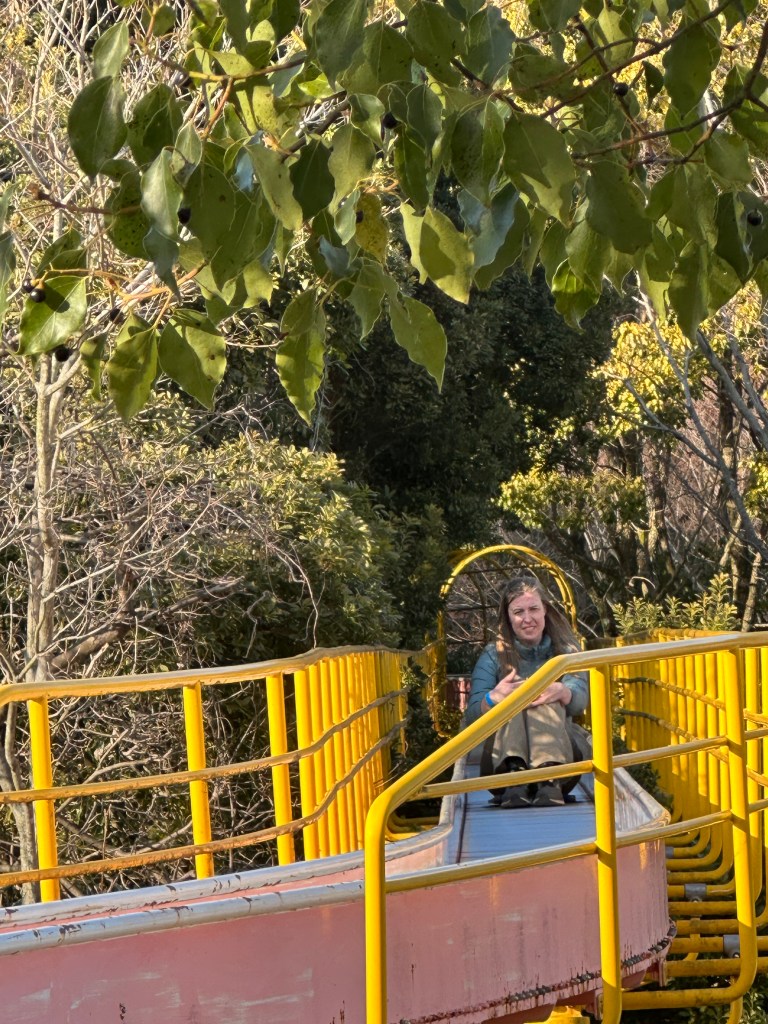
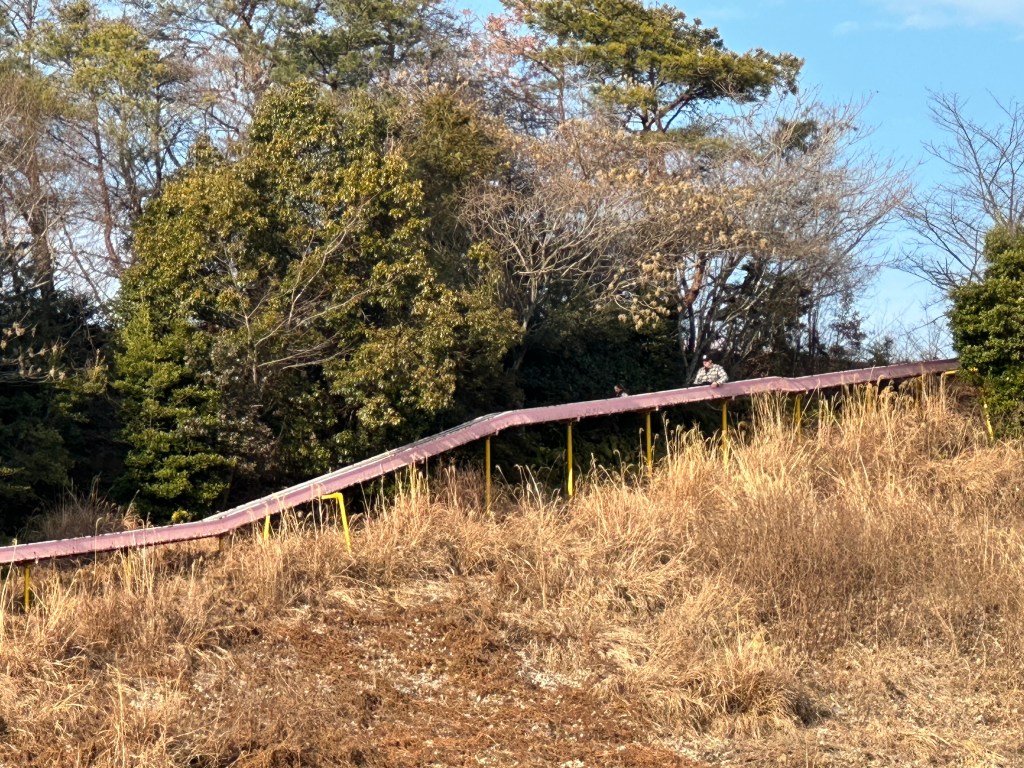
Our next stop was Iwakuni, where we met our friends from Canada. Eric married Kiyono, who was initially from Suo Ochima, an orange producing island a bit south of Hiroshima. It is less than an hour on a local train. Anita has scoped out a long roller slide up in the hills, so off we all went. It looked too rickety for me, so I appointed myself photographer.
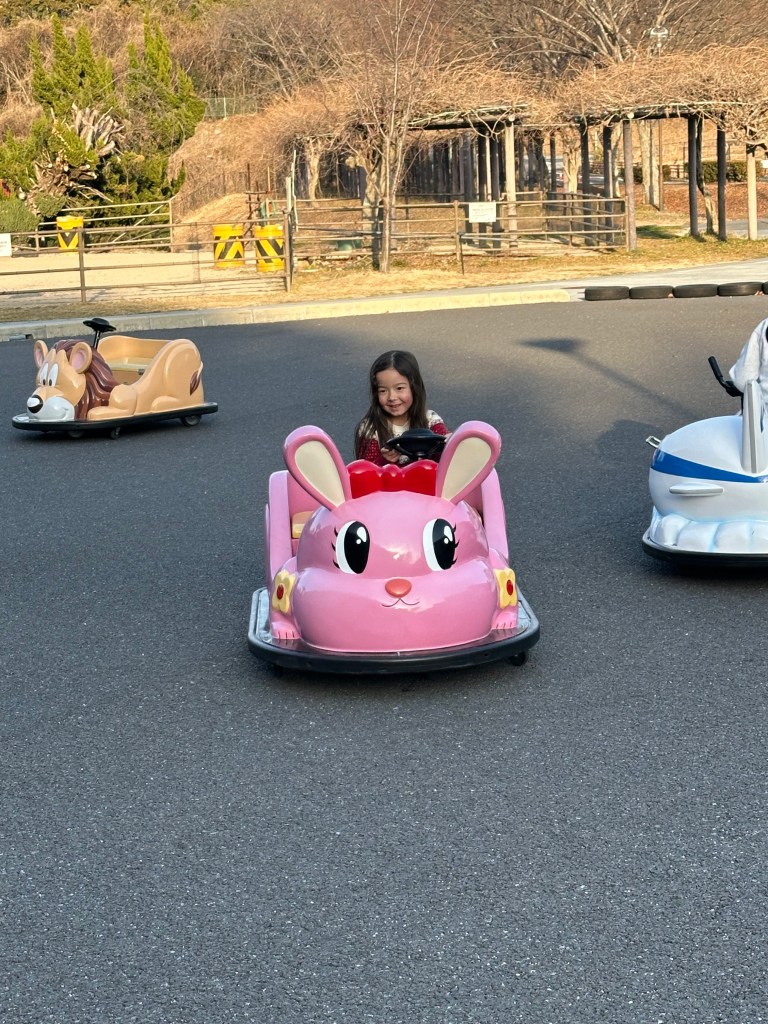
A portion of the park had some fun ride-on cars, and five year old Hana had fun driving hers. Her bother Eddie, 20 months, rode with his mom.
Saturday morning we watched Hana at her dance class. She’s very graceful and looks adorable in her kimono. Then it was time to see Eric’s orchards. He’s accumulating small parcels of land, some with established trees, others that he’s planted himself.
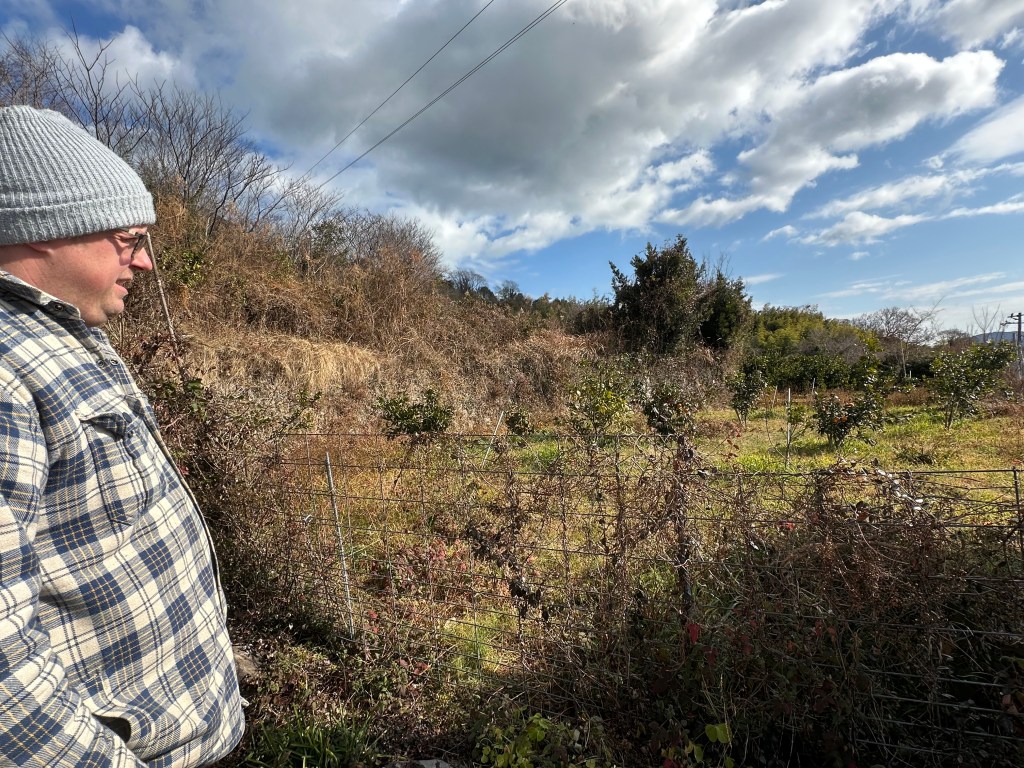
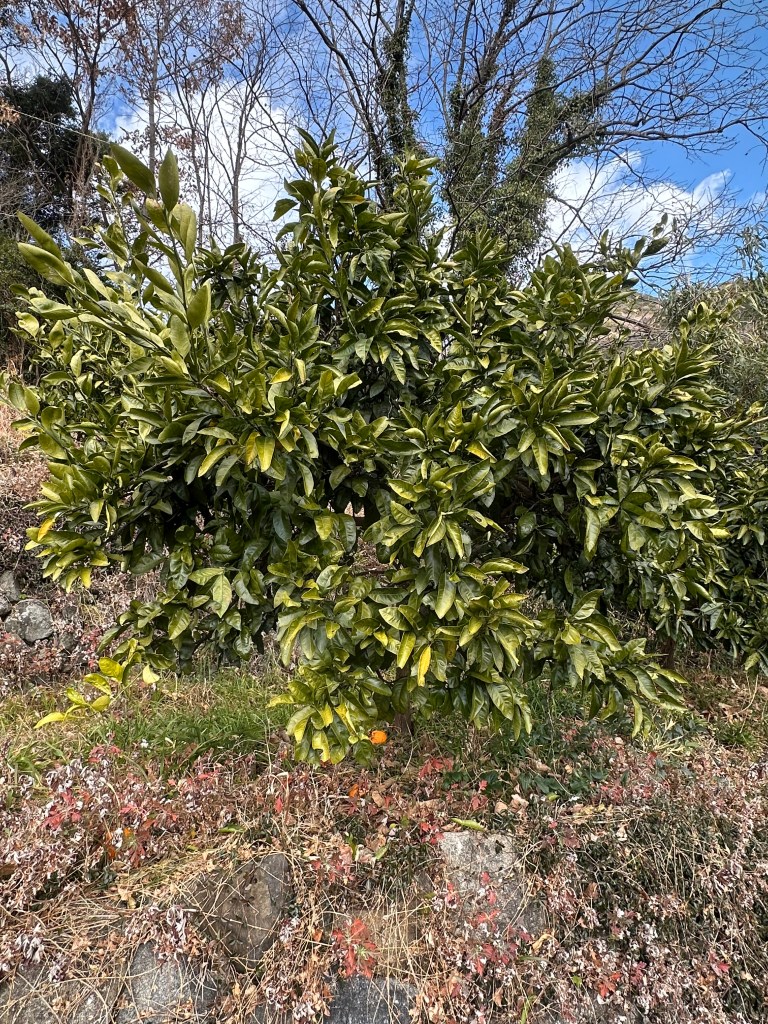
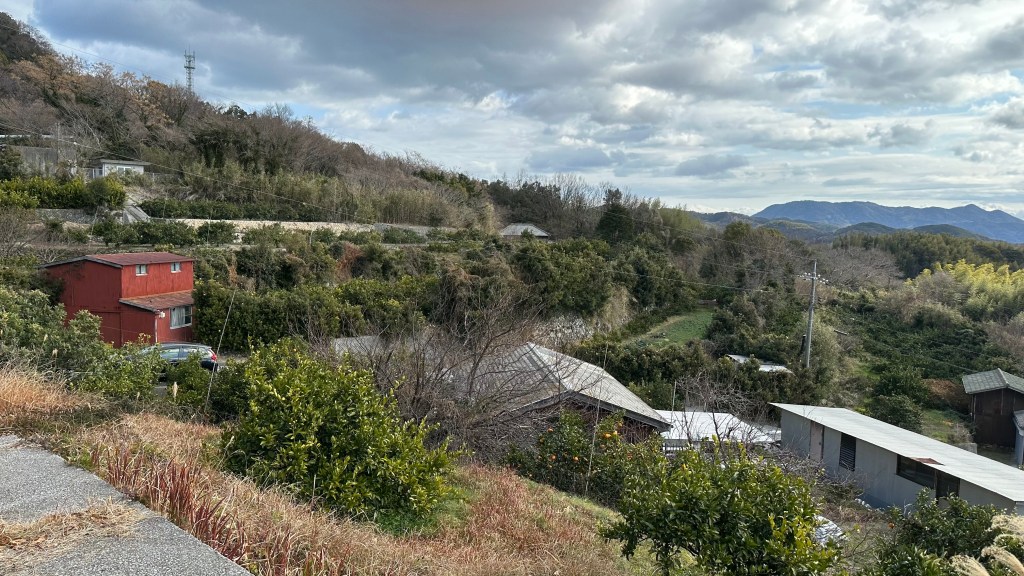
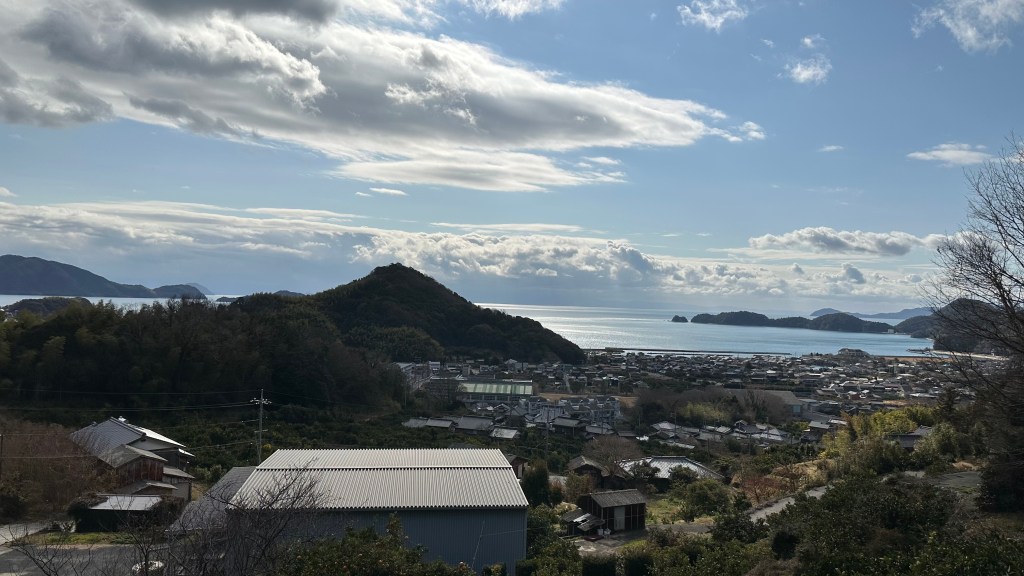
Orange trees take five to ten years to become productive, and are most profitable between 20 and 30 years old. Eric has made an impressive start in his four years here.
 Juliette Knits